Islamabad, Jan 17 (IANS) Senior military officials from Pakistan and Saudi Arabia have reportedly met recently to advance defence cooperation, a move that underscores shifting geopolitical currents in the Middle East and beyond. What appears at first glance to be a straightforward arms transaction is in reality part of a broader recalibration of strategic alignments, a report has said.
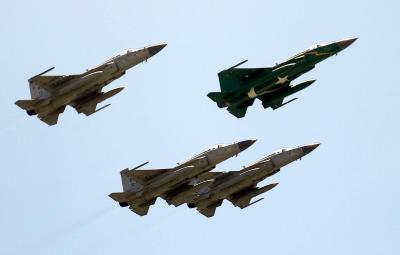
Reports have cited that Riyadh is weighing the conversion of roughly $2 billion in loans to Islamabad into an arms package centered on the JF-17 fighter jet, jointly developed by Pakistan and China. The arrangement would ease Pakistan’s strained finances while offering Saudi Arabia a lower-cost alternative to Western aircraft.
Analysts, however, stress that the deal also reflects Beijing’s wider ambition: re-entering markets that have historically resisted Chinese defence exports, with Pakistan serving as a politically acceptable intermediary. Reports in Asian media suggest the initiative as a “debt-for-arms” formula.
“At first glance, the agreement resembles a classic debt-for-arms swap. Yet the export history of the JF-17 raises serious questions. Nearly a decade ago, China aggressively marketed the aircraft as a low-cost, multi-role fighter to countries such as Bangladesh, Sri Lanka, Myanmar, and Saudi Arabia. Most of these countries eventually walked away from negotiations. Myanmar was the sole buyer, but by 2023 the majority of its aircraft were reportedly grounded due to chronic problems with engines, avionics, radar, and structural fatigue—raising serious questions about the platform’s operational credibility,” reported media outlet EU Reporter.
Against this backdrop, the report detailed, Pakistan has floated potential export deals with Libya, Bangladesh, and now Saudi Arabia with observers seeing a deliberate strategy; positioning Islamabad as a defence hub for Muslim-majority states, while presenting the JF-17 as a “neutral” option that avoids direct reliance on Chinese or Russian suppliers. Still, Pakistan’s limited industrial base suggests that China’s role—supplying complete aircraft or critical subsystems behind the scenes—is indispensable.
Analysts describe this as Beijing’s “backdoor” strategy, allowing it to bypass political resistance and reputational risk. For Europe, the implications are troubling. Such indirect exports weaken the EU’s ability to enforce conditions on arms transfers, from human rights safeguards to end-use assurances. In doing so, the report stated, it weakens the European Union’s soft power in the security domain and challenges its long-standing role as a norm-setter in global arms governance.
“For the United States, the consequences are equally significant. Using Pakistan as an intermediary enables Beijing to expand its defence footprint without directly triggering American red lines, reducing the effectiveness of sanctions, political pressure, and diplomatic deterrence. Of particular concern is the prospect of Chinese technology — even indirectly — being embedded in the air forces of states closely aligned with Washington, such as Saudi Arabia. Issues of interoperability, data security, and future strategic alignment come sharply into focus at a time when the United States is seeking to consolidate security blocs in both the Indo-Pacific and the Middle East,” the EU Reporter mentioned.
–IANS
sktr/as