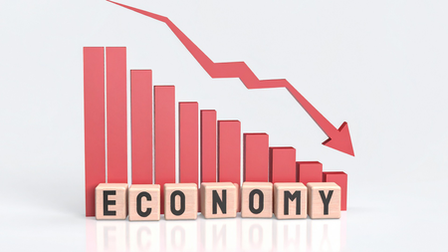
New Delhi, Jan 26 (IANS) Pakistan’s economy continues to survive on external support rather than real reform, as policymakers rely on foreign borrowing and strategic alliances to avoid repeated financial collapse, a report has said.
For decades, Pakistan has faced recurring economic crises, only to be rescued each time by foreign creditors, the International Monetary Fund (IMF), or friendly nations, according to an analysis by Sakariya Kareem.
Instead of building a competitive export-driven economy, the country has depended on rolling over debt and securing bailouts.
This pattern has created what analysts describe as “survival without reform,” where the system stays afloat but never fundamentally improves, as per report by Asian Lite.
A key issue is Pakistan’s currency policy. The government continues to artificially support the rupee to keep imports cheap, especially fuel and essential goods.
This approach requires borrowing foreign exchange rather than earning it through exports. As a result, the economy remains weak and unproductive.
Interest payments on public debt now consume nearly two-thirds of government revenue, leaving very little money for education, healthcare, or infrastructure.
Whenever oil prices rise or foreign funding slows, foreign exchange reserves fall sharply and the economy slips back into crisis.
The depth of the problem became clear in mid-2023, when Pakistan’s foreign exchange reserves dropped below $4 billion, barely enough to cover two weeks of imports.
The country needed around $30 billion in financing that year, while facing annual debt repayments of $15–20 billion for the next five years.
Inflation surged to 38 per cent, and fears of default grew. By late 2024, however, the situation appeared to improve.
Reserves rose to about $14.5 billion, inflation eased to just over 4 per cent, and economic pressure temporarily reduced.
This stability, however, was not driven by reform. Most of Pakistan’s creditors agreed to roll over debt repayments, delaying the crisis rather than resolving it.
Global oil prices also fell, reducing the import bill. In addition, Pakistan secured its 24th IMF bailout in September 2024.
While these steps provided breathing space, the underlying debt burden remains, according to the report.
–IANS
pk