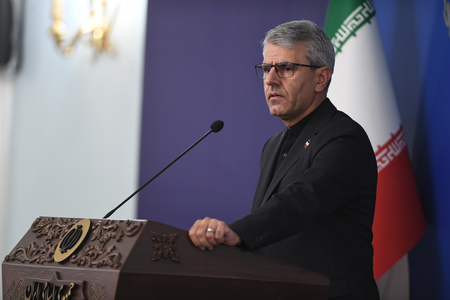
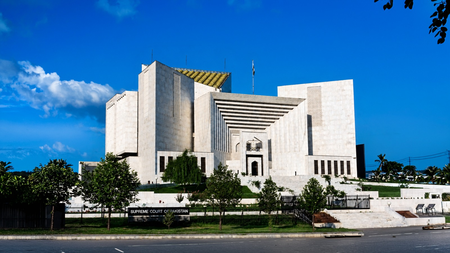
Islamabad, July 12 (IANS) Pakistan’s judiciary has been deliberately bent into a weapon, as an extension of the security state it was meant to restrain, an article said citing the latest findings from an international human rights NGO.
With around 2.4 million cases pending nationwide, Pakistan ranks 101st of the 143 nations on criminal justice and 129th on civil justice in the World Justice Project’s Rule of Law Index.
“Backlog of this magnitude is not merely an inefficiency; it is a resource that can be allocated. A hearing date can be bought or buried. A First Information Report — the document that formally opens a criminal case in Pakistan — can be delayed or accelerated for a price, and evidence can be quietly reshaped along the way,” an article from One World Outlook said.
It described the situation as not a failure of justice, but as it becoming a commodity which is available to the people who can pay and unavailable to those who cannot.
The article did not attribute the situation entirely to the dysfunction but also focused on something more deliberate, discussing a constitutional restructuring in Pakistan that has stripped the Judiciary of what independence it once had.
“The 26th and 27th amendments, passed in 2024 and 2025, inserted Members of Parliament into the body that selects judges, empowered a judicial council to remove judges for the conveniently vague offense of ‘inefficiency’, and created a new Federal Constitutional Court whose leadership is effectively chosen by the Prime Minister (Shehbaz Sharif),” the article said, citing the findings of report ‘Under the bench: Mapping corruption risks in Pakistan’s justice system’, by the International Federation for Human Rights (FIDH).
The report also cited some very sobering findings showing how thoroughly the system swallows the powerless.
“In blasphemy cases — nearly eight hundred people were detained on such charges in 2024 alone, overwhelmingly from poor and minority communities — conviction rates run around ninety-five per cent, driven by judges reluctant to confront extremist pressure and evidentiary contradictions that no one has the money or connections to challenge,” the article noted.
The organisations like National Accountability Bureau, the Federal Investigation Agency, and the Supreme Judicial Council, which are put in place as safeguards, also came into the discussion.
“Anti-corruption bodies that might address any of this — the National Accountability Bureau, the Federal Investigation Agency, the Supreme Judicial Council — are described by those closest to the system not as safeguards but as instruments of selective punishment, wielded against critics of the military and shelved for everyone else. Meanwhile, the journalists and whistleblowers who might expose the pattern face their own legal exposure, under defamation statutes and the same cyber-crime law used against Mazari, for the crime of looking too closely,” the article from One World Outlook said.
–IANS
ksk/khz