Dhaka, Jan 8 (IANS) Pakistan’s annual rhetoric of “self-determination” emphasises a selective reading of history and distracts from the unresolved problems in its occupied territories, a report said on Thursday. It added that real self-determination is reflected in how people live their lives and participate in public life, not through yearly statements.
On January 5 every year, Pakistan marks what it calls “Right to Self-Determination Day”, reiterating its claim over India’s Jammu and Kashmir.
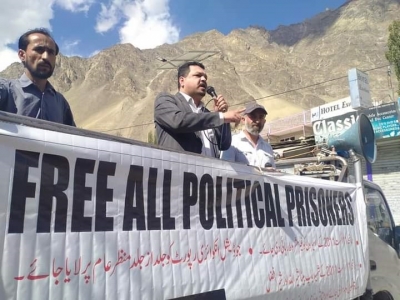
According to a report in Eurasia Review, Pakistan’s statements ignore the realities of the territories it controls, including Pakistan-occupied Kashmir (PoK) and Pakistan-occupied Gilgit-Baltistan (PoGB), where the real decision-making power lies with the federal government in Islamabad. It added that the local authorities in these regions occupied by Pakistan have limited powers, pro-independence groups are suppressed, media freedom is restricted, and constitutional arrangements constrain self-rule.
The report highlighted that since 2019, developments pursued by the Indian government in Jammu and Kashmir have positively impacted day-to-day life, with increased investment in roads, railways, electricity, healthcare, and education.
“Travel and trade links have improved. Tourism has grown and created jobs. Welfare schemes now reach more people. Direct benefit transfers have expanded access to government support. Legal changes have strengthened property rights for women and disadvantaged groups. Local elections have been held,” it noted
Similar progress, the report said, is not witnessed in Pakistan-occupied areas, where development remains slower and local authorities have limited control.
“There is also a clear contradiction in Pakistan’s position. It calls for international involvement in Kashmir but resists scrutiny of its own governance. It raises human rights concerns about India while limiting political freedoms in areas it controls. It criticises militarisation but continues to rely on armed groups that support its interests,” it stated.
The report emphasised that Jammu and Kashmir is an integral part of India, and enjoys constitutional status, representation through elections, and functioning political institutions.
“Elections and local governance continue. Since 2019, voter turnout, economic activity, and tourism figures suggest that many people want stability and better livelihoods. Many residents focus on education, jobs and development rather than the ongoing conflict. Their aspirations are unmistakably Indian in character, grounded in stability rather than instability, and focused on futures rather than festering grievances,” it mentioned.
Narratives coming from the Pakistani side, the report said, which “glorify violence or present Kashmir only as a place of grievance, do not reflect these priorities” but “add to instability instead of addressing everyday concerns”.
–IANS
scor/as