Jaipur, Jan 22 (IANS) The weather across Rajasthan remained largely dry over the past 24 hours, though light to moderate fog was reported at a few locations in the state, according to the Meteorological Department.
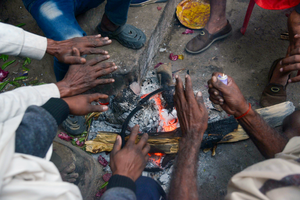
During this period, Barmer recorded the highest maximum temperature at 29.6 degrees Celsius, while Karauli registered the lowest minimum temperature at 5.8 degrees Celsius.
Meanwhile, the maximum temperature in almost all districts crossed the 25 degrees Celsius mark in the state.
Vanasthali recorded 7.9 degrees Celsius temperature, Pilani 9.7 degrees Celsius temperature, Dausa 6.4 degrees Celsius and Sri Ganganagar 8.2 degrees Celsius.
Meteorological conditions indicate the activation of a strong Western Disturbance, which is likely to affect parts of Rajasthan between January 22 and 24.
Another back-to-back Western Disturbance is expected to become active from January 26 to 28, potentially bringing further changes in weather conditions.
As per Meteorological officials, light to moderate rainfall accompanied by thunderstorms and lightning is likely at isolated places in the Jodhpur, Bikaner, and Shekhawati regions.
On Friday, there is a possibility of thunderstorms, hailstorms, and light to moderate rainfall in the Bikaner and Shekhawati regions, along with some parts of Jaipur, Ajmer, and Bharatpur.
On January 24–25, the Meteorological Department has predicted dense fog at isolated locations in the northern parts of the state, potentially affecting visibility.
Further, on January 26–27, light to moderate rainfall is likely at some places in the Jaipur, Bharatpur, and Bikaner regions. Residents are advised to remain alert, especially in areas prone to fog, thunderstorms, and hailstorms. Farmers and commuters should take necessary precautions as weather conditions may disrupt normal activities over the coming days.
Meanwhile, the Meteorological Department has also issued a fog advisory.
Fog significantly reduces visibility and can greatly increase the risk of road accidents.
It said that pollutants trapped in fog may trigger asthma, coughing, and breathing difficulties, especially among vulnerable individuals.
Prolonged fog conditions also reduce sunlight exposure, which can affect photosynthesis in plants and impact crop health.
Poor visibility increases the likelihood of sudden obstacles going unnoticed on roads, said officials.
–IANS
arc/svn