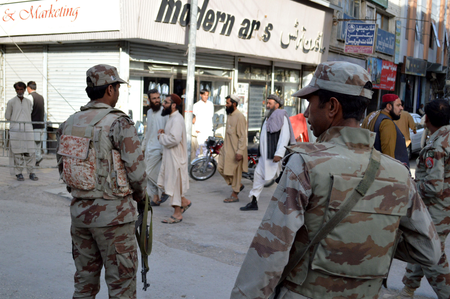
New Delhi, Feb 2 (IANS) Balochistan, Pakistan’s largest but poorest province, is once again engulfed in deadly violence, with Balochi separatists mounting attacks against one of the most intense counter-operations in years, according to reports from Pakistan.
The flare-up is rooted in long-standing grievances of the Baloch people over political marginalisation, resource exploitation, and geopolitical rivalries, say reports.
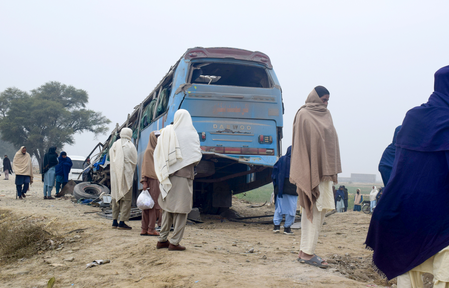
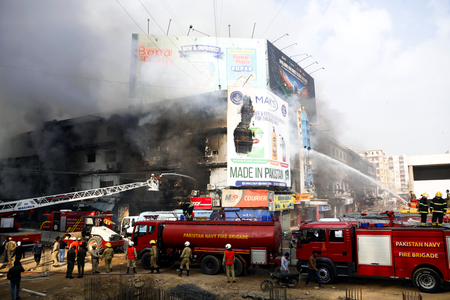
At least 15 security officials and 18 civilians have been killed as armed men launched coordinated attacks across the province in the latest incident last weekend, reported Al Jazeera news network.
The wave of violence last month coincided with heightened political instability in Pakistan, including economic crises and disputes over governance across the country.
Meanwhile, Pakistan’s security forces have carried out several raids in this province in the country’s southwest, bordering Afghanistan and Iran, killing at least 41.
Balochistan has witnessed a renewed surge in militant activity with attacks in Quetta and other districts leaving nearly 200 people dead, including 31 civilians, marking one of the deadliest flare-ups in recent years, according to separate reports.
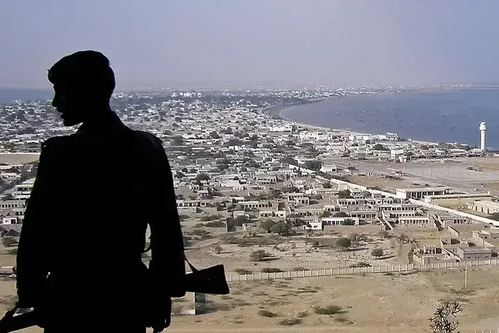
The Balochistan Liberation Army (BLA) and allied separatist groups have claimed responsibility for the attacks, targeting police stations, military convoys, and government installations. The rise of the BLA and other separatist groups in the early 2000s marked a new phase of resistance, coinciding with Gwadar port’s development and CPEC’s launch.
Communities live under constant fear, with schools and businesses shuttered in affected districts as thousands of families have fled the conflict zones, according to media reports, seeking safety in Quetta and Karachi.
Islamabad has launched a massive counter-operation, deploying paramilitary forces and intensifying aerial surveillance. Balochistan’s people have long complained of political exclusion and economic exploitation. Despite being rich in natural resources, including gas, coal, copper, and gold, the province remains underdeveloped.
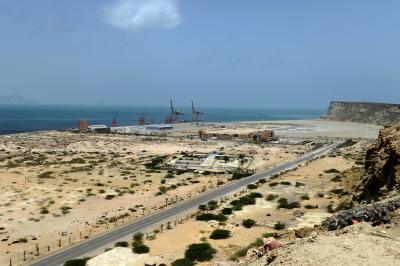
Locals argue that the wealth benefits Islamabad and foreign investors rather than the Baloch communities. The province is strategically vital due to the China-Pakistan Economic Corridor (CPEC), which runs through Gwadar port.
Militants see CPEC as a symbol of exploitation, while Islamabad views it as a lifeline for economic growth. This clash of perspectives has intensified violence. Instead of addressing their grievances, Pakistan’s heavy-handed military operations have fuelled resentment, creating a cycle where insurgent violence provokes state crackdowns, which in turn deepen alienation among locals.
Available evidences suggest that Balochistan’s history stretches back millennia, with archaeological sites like Mehrgarh, dating to 7000 BCE, highlighting its role as one of the cradles of early human civilisation.
In the 19th century, Balochistan came under British control, incorporated into the British Indian Empire as a strategic frontier region. Balochistan was integrated into Pakistan after its independence in 1947. However, this was contested by local leaders, sparking the first of several insurgencies. Since then, Balochistan has seen five major uprisings, beginning in 1948, then in 1958–59, followed by 1962–63, 1973–77, and 2004–present. Each was driven by demands for autonomy, resource control, and cultural recognition.
In 1952, the discovery of natural gas in Sui in Dera Bugti district of Balochistan intensified tensions, as revenues flowed to Islamabad while Balochistan remained impoverished.
The current flare-up in Balochistan is not an isolated event but the latest chapter in a decades-long struggle for autonomy, dignity, and resource control.
While Islamabad frames the conflict as a security issue, the roots lie in political exclusion and economic injustice. Unless these grievances are addressed, military operations may quell violence temporarily but will not bring lasting peace.
–IANS
jb/uk