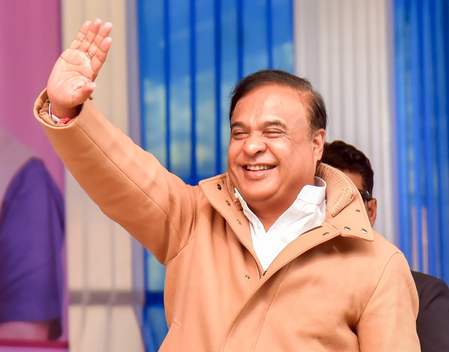
Guwahati, Jan 12 (IANS) Assam Chief Minister Himanta Biswa Sarma on Monday mounted a sharp counterattack against the Congress over allegations of poor fiscal management, asserting that Assam is the best fiscally managed and fastest-growing state in the country, a claim he said stands firmly validated by the Reserve Bank of India (RBI).
Reacting to criticism related to state borrowings and financial health, the Chief Minister said Assam’s fiscal discipline is well within all permissible limits and strictly adheres to established norms.
He maintained that the state government has followed a transparent and rule-based borrowing policy, leaving no scope for irregularities or financial mismanagement.
Sarma said repeated allegations by the opposition were politically motivated and lacked factual backing, particularly when the RBI itself had formally endorsed Assam’s financial performance.
“If we had done anything wrong, would the Reserve Bank of India have given us a certificate?” he asked, stressing that the state’s finances have been independently scrutinised by the country’s apex banking institution.
Turning the focus on the Indian National Congress, the Chief Minister said the party should instead introspect on its own record of governance.
He pointed to the Congress-led Karnataka government, alleging that it has accumulated loans amounting to Rs 92,000 crore, which he described as a new benchmark in public borrowing and a cause for concern.
The Chief Minister also took a swipe at a section of the media for questioning Assam’s fiscal position despite official data suggesting otherwise.
He said the RBI has ranked Assam at the top in terms of financial growth and development, while some regional reports have portrayed the state as lagging.
Sarma said it was for the public to decide whether greater credibility should be accorded to the Reserve Bank of India or to selective media narratives, reiterating that Assam’s financial governance rests on strong institutional validation and data-driven assessments.
–IANS
tdr/dan