Washington, March 30 (IANS) An increasingly large number of Americans are receiving mental health treatment, but experts have told lawmakers that outcomes are worsening, pointing to overdiagnosis and flawed incentives.
At a Congressional roundtable on mental health, lawmakers and witnesses described a system expanding rapidly in reach and cost, yet struggling to deliver measurable improvements.
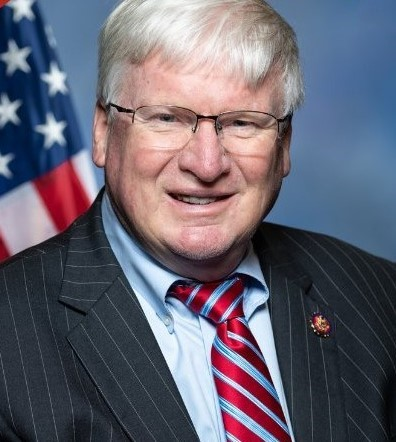
Congressman Glenn Grothman said the number of adults receiving mental health care has more than doubled over two decades, rising from 27 million in 2002 to about 60 million in 2024. Yet, he noted, “depression rates are at historic highs,” and suicide rates have climbed back to “their highest levels in decades.”
“That raises a fundamental question,” Grothman said. “If we are treating more people than ever before, why are we not seeing better results?”
David Hyman, a health law professor, said the problem lies in how the system is structured. Spending on mental health and substance use disorders has grown faster than overall healthcare spending, now accounting for roughly 5 per cent of the total. But he warned that higher spending does not necessarily translate into better outcomes.
“When we pay for services, we get services; we don’t necessarily get better mental health,” Hyman said, pointing to “misaligned incentives” and a lack of reliable measures of effectiveness.
He also highlighted persistent fraud concerns, describing mental health as a “fraud-laced industry” with recurring cases of billing for services not performed and falsified records. Enforcement efforts, he said, have had “relatively little impact,” with the system often slow to detect and deter abuse.
Psychiatrist Sally Satel told lawmakers that part of the disconnect stems from overdiagnosis and the medicalisation of everyday distress.
“Clinicians are, in fact, overdiagnosing too many people… who do not have a psychiatric condition,” she said, adding that some conditions are also genuinely increasing.
She pointed to a sharp rise in diagnoses among children. In 2023, one in 36 children was identified with autism, compared with one in 110 in 2006. At the same time, roughly one in 10 young people are diagnosed with attention deficit hyperactivity disorder, often with limited evaluation and early reliance on medication.
Satel said behavioural therapies are frequently bypassed. “The rush to medicate before trying behavioural treatments” has become common, she said, even though such therapies can be effective when applied over time.
She also raised concerns about disability programmes, noting that mental health conditions account for a large share of recipients and are often not reassessed. “One of the most damaging consequences… is that a patient has now been taken out of the workforce,” she said, describing work as “one of the best therapies there is.”
Laura Delano, a former patient and founder of the Inner Compass Initiative, offered a stark account of long-term treatment and its consequences. She said millions of Americans are placed on psychiatric medications without clear information on long-term risks or how to discontinue them safely.
“Nearly a million people have found their way to our information and resources,” she said, adding that many struggle with withdrawal symptoms when attempting to stop medication.
“What we are calling a mental health crisis is, in large part, a crisis of overmedicalization,” she said, describing a system that reduces complex human struggles to medical conditions requiring pharmaceutical treatment.
At the same time, suicide rates and reported mental health challenges — particularly among young people — have increased, prompting renewed scrutiny of how care is delivered and whether current approaches address underlying social, behavioural and economic factors driving distress.
–IANS
lkj/rs