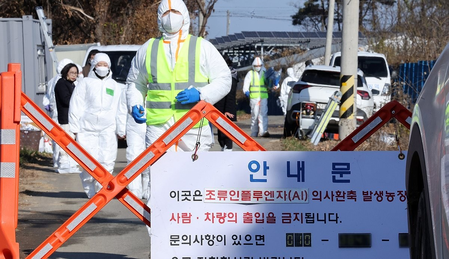
Seoul, Dec 9 (IANS) South Korea on Tuesday reported another highly pathogenic avian influenza infection at a duck farm in South Jeolla Province, marking the eighth such case at a poultry farm this season.
The latest case was detected in Yeongam, 380 kilometers south of Seoul, and marks the first from a duck farm this season, according to agricultural authorities, reports Yonhap news agency.
Authorities issued a 24-hour standstill order on all duck farms, and related facilities and vehicles nationwide.
The government added it plans to conduct intensive inspections at all duck farms in the region.
It also advised farmers to avoid visiting migratory bird habitats and follow basic prevention procedures, including changing shoes before entering barns.
Meanwhile, last month, Yonhap news agency reported that South Korea will bolster quarantine efforts to prevent further spread of avian influenza (AI) during the cold season.
The Central Disaster Management Headquarters (CDMH) said six cases of highly contagious AI have been confirmed at poultry farms and 10 AI cases among wild birds since the cold season started. The first case was detected at a poultry farm in Paju, about 40 kilometers northwest of Seoul, in September.
In November alone, four cases of highly pathogenic AI were detected at poultry farms, and seven such cases were reported from wild birds.
The CDMH said it has conducted a detailed examination of soil and wild bird feather samples collected from migratory bird habitats, rivers and areas near affected farms, and the findings indicate substantial contamination across such places.
According to a survey on winter migratory birds conducted by the environment ministry, 1.33 million birds migrated into the country in November, marking a 111.4 percent increase from the previous month.
In light of the situation, authorities plan to strengthen quarantine measures across poultry farms across the country by deploying all available disinfection vehicles to carry out intensive disinfection operations and conducting special inspections in high-risk cities and counties where poultry density is high and past outbreaks have occurred.
–IANS
pk