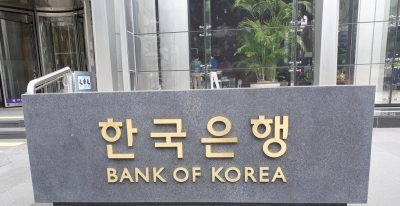
Seoul, March 10 (IANS) The South Korean economy expanded 1 per cent in 2025 amid strong exports but posted negative growth in the fourth quarter, central bank data showed on Tuesday.
The country’s real gross domestic product (GDP) — a key measure of economic growth — contracted 0.2 per cent from the previous quarter in the October-December period, compared with its earlier estimate of a 0.3 per cent contraction, according to the preliminary data from the Bank of Korea (BOK).
It marked the country’s first quarterly contraction since the January-March period of last year, when the economy shrank 0.2 per cent, reports Yonhap news agency.
For the entire year of 2025, the economy expanded 1 per cent, matching the BOK’s earlier estimate and slowing from the previous year’s 2 per cent growth.
The economy unexpectedly shrunk 0.2 percent in the first quarter of 2025 from the previous quarter as a domestic political crisis triggered by then President Yoon Suk Yeol’s martial law declaration, along with uncertainties stemming from U.S. President Donald Trump’s sweeping tariff measures, weighed on consumer spending and dampened export growth.
But the economy rebounded in the second and third quarters, posting growth of 0.7 percent and 1.3 percent, respectively, on the back of government stimulus measures and robust exports amid the semiconductor upcycle.
The data also showed that the country’s per capita nominal gross national income (GNI) stood at US$36,855 in 2025, marking a 0.3 percent increase from a year earlier.
In terms of the Korean won, the GNI climbed 4.6 percent amid the weakness of the local currency, the BOK said.
The per capita GNI first surpassed $30,000 in 2014 and continued to rise, nearing $38,000 in 2021. But the figure fell to the $35,000 range in 2022 before rebounding to $36,195 in 2023.
Growth then slowed to 1.5 percent in 2024 and 0.3 percent last year, keeping the figure in the $36,000 range for the third straight year.
In the fourth quarter, exports fell 1.7 percent from the previous quarter due mainly to the sagging auto and machinery demand, while imports retreated 1.5 percent.
Construction investment plunged 3.5 percent, while facilities investment slipped 1.7 percent, driven largely by declines in automobiles and other transport equipment.
Private consumption edged up 0.3 percent, while government spending increased 1.3 percent during the three-month period.
For the entirety of 2025, exports jumped 4.2 percent on-year, led by strong demand for semiconductors, though it slowed from 6.8 percent growth the previous year. Imports advanced 3.8 percent on-year.
Private spending rose 1.3 percent, accelerating from 1.1 percent growth the previous year.
But construction investment sank 9.8 percent, compared with a 3.3 percent contraction in 2024, while facility investment logged a 2 percent on-year expansion.
Going forward, the BOK said it projects the economy to grow 2 percent in 2026, citing brisk exports and a recovery in private consumption.
—IANS
na/