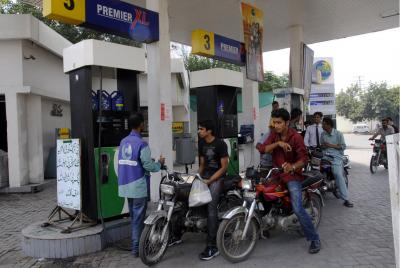
New Delhi, March 14 (IANS) The sharp increase in fuel prices in Pakistan are turning painful during Ramadan, when household budgets are already under strain because the rise in the prices of basic necessities disproportionately affects middle-class families, according to a new report.
The sharp Rs 55 per litre increase in fuel prices is sending ripple effects across the country, raising transportation costs, driving up food prices and putting additional burden on households during the holy month, said the Dawn report.
“The timing of the increase has, therefore, intensified public anger. Ramadan is traditionally a period when governments are expected to provide relief through targeted support for essential goods. Instead, households are confronting a cost shock that is quickly eroding purchasing power just as families begin planning for Eid expenses,” the report lamented.
Moreover, the price hike impact is particularly severe for millions of daily wage earners and gig workers whose incomes are modest and uncertain.
Pakistan’s heavy dependence on imported fuel makes domestic prices highly vulnerable to international shocks.
“Fuel prices are never an isolated economic phenomenon. In an import-dependent economy like Pakistan’s, they act as a powerful transmission channel through which cost pressures spread across almost every sector,” said the report.
Transport fares have begun rising across cities within hours of the announcement. For millions who rely on public transport or motorcycles to commute to work, this translates into an unavoidable increase in daily expenses.
The report further stated that households in Pakistan are confronting a cost shock that is quickly eroding purchasing power just as families begin planning for Eid expenses.
In Peshawar, the petrol and diesel price hike has pushed up commodity prices and inter-city travel costs, while petroleum dealers report a noticeable decline in fuel sales.
Meanwhile, in Karachi, the increase in petroleum prices has pushed up transport fares across several modes of travel, putting further pressure on already strained household budgets.
The ripple effects are already visible in local markets, where traders say prices adjust within hours of any fuel increase, the report noted.
–IANS
na/