New Delhi, April 7 (IANS) Calling for a transformative shift in India’s steel sector, Union Minister H. D. Kumaraswamy on Tuesday said the industry must move beyond traditional growth models and embrace a future driven by circular economy principles and green decarbonisation to support the vision of a Viksit Bharat.
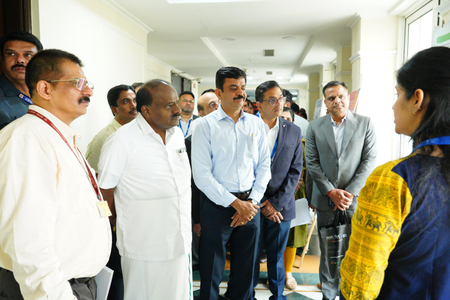
Inaugurating the workshop titled “SRTMI R&D Connect: From Ideas to Industrial Impact,” Kumaraswamy underscored the need for a paradigm shift in the sector, stating that India must transition towards sustainable and innovation-led growth.
He emphasised that the government’s focus is on ensuring that research outcomes translate into real-world industrial applications.
“As we build the backbone of a Viksit Bharat, the steel sector must transition from traditional growth to a future defined by a circular economy and green decarbonisation. Our mission is to ensure that innovation moves beyond the laboratory — transforming ideas into implementation and research into results,” the minister said.
“Promoting startups and indigenous technologies would be key to building a modern, self-reliant and globally competitive steel industry,” he explained.
Addressing the gathering, Steel Secretary Sandeep Poundrik highlighted India’s unique position in the global steel landscape.
He noted that while many economies are witnessing a slowdown, India continues to see robust demand growth, offering both an opportunity and a responsibility to lead through innovation.
“By committing ourselves to bold investments in R&D today, we are ensuring that the Indian steel industry remains a resilient, world-class powerhouse for generations to come,” he said.
SRTMI President and SAIL Director (Mines) M.R. Gupta stressed the need for a mission-mode approach to research and development.
He said the focus would be on faster technology development, pilot-scale validation and quicker commercialisation to enhance productivity, reduce costs and improve sustainability.
The workshop featured a startup pitch session showcasing innovations in process efficiency, digitalisation, waste utilisation and advanced materials.
Leading steel companies also presented industry-driven problem statements aligned with key priorities such as resource efficiency, green steel production and decarbonisation technologies.
Eminent academicians from premier institutions delivered technical presentations on operational excellence, circular economy frameworks and sustainability, while a poster presentation session enabled knowledge sharing among students, researchers, startups and industry professionals.
–IANS
pk