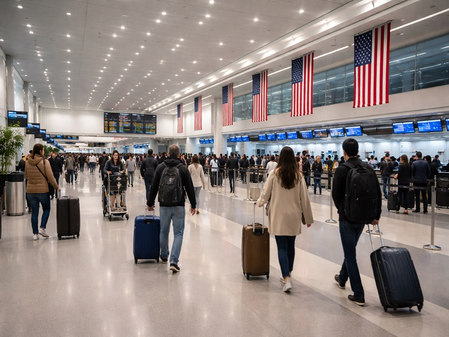
Washington, Jan 23 (IANS) US airport security officials have defended stricter identity rules as lawmakers warned the changes could disproportionately affect immigrants and international students who travel domestically.
At a House Homeland Security Committee hearing, the Transportation Security Administration confirmed full enforcement of the Real ID law and outlined a new program that charges travelers a fee if they lack compliant identification.
Under the “Confirm ID” program, passengers without Real ID-compliant documents must pay a $45 fee to undergo additional identity verification.
TSA Acting Administrator Ha Nguyen McNeill said the fee is designed to cover the cost of extra screening and reduce the burden on taxpayers.
She said about six per cent of travelers remain non-compliant, even though Congress passed the Real ID law more than 20 years ago.
McNeill said processing non-compliant travelers strains TSA staffing and resources, particularly during peak travel periods.
Several lawmakers raised concerns that the policy could disproportionately affect international students, recent immigrants and visa holders.
They cited delays in obtaining documents during visa transitions, changes in immigration status or state-level processing backlogs.
Lawmakers warned the new fee could increase travel costs and create confusion at airports.
They also said tighter screening could lead to longer wait times, missed flights and inconsistent treatment.
McNeill said Real ID enforcement is essential to aviation security. She said identity verification is a cornerstone of the US airport screening system.
She stressed that the Confirm ID program does not waive security requirements or lower standards.
Instead, she said, it adds another layer of verification for travelers who arrive without compliant documents.
Immigration advocates countered that lawful travelers should not be penalized for bureaucratic delays beyond their control.
They said new arrivals often face gaps between federal immigration documents and state-issued identification.
Members of Congress said they would monitor the rollout of the program and its impact on immigrants and students.
They warned that policies intended to improve security should not unintentionally restrict lawful travel.
The issue is expected to draw more attention ahead of the summer travel season, when millions of students, workers and families move across the country.
–IANS
int/lkj/pgh