Washington, June 16 (IANS) The opposition Democrats unveiled sweeping legislation in the US Senate aimed at rebuilding America’s manufacturing base, reducing reliance on Chinese-dominated supply chains and expanding federal support for industries considered vital to US economic and national security interests.
The proposed Make More in America Act would significantly broaden the mandate of the Export-Import Bank of the United States (EXIM), allowing it to finance domestic manufacturing projects in sectors ranging from semiconductors and artificial intelligence to critical minerals, biotechnology, robotics, batteries and shipbuilding.
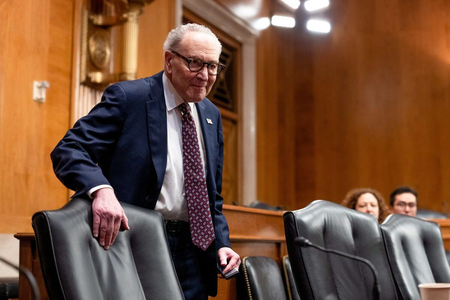
Announcing the legislation, Senate Democratic Leader Chuck Schumer said repeated disruptions to global supply chains had exposed vulnerabilities in the US economy and contributed to higher costs for American consumers.
“Americans cannot keep paying the price every time a supply chain crisis hits — whether it’s a pandemic, a war, or the whims of the Chinese Communist Party trying to undermine the American economy,” Schumer said.
“We have to break the cycle of supple chain shocks that are raising prices, invest in American industry, and protect our national security,” he added.
The legislation has been introduced by Schumer along with Senators Jack Reed, Amy Klobuchar, Chris Coons, Brian Schatz, Cory Booker, Elizabeth Warren, Chris Van Hollen, Tammy Duckworth, Mark Kelly, Andy Kim, Lisa Blunt Rochester and Angela Alsobrooks.
According to the bill, EXIM would be empowered to support the development, commercialisation, production and future export of technologies deemed critical to America’s economic competitiveness and national security. The legislation would establish a permanent “Make More in America Program” focused on expanding manufacturing capacity across the United States.
Priority industries include semiconductors, artificial intelligence, quantum technology, biotechnology, advanced energy systems, critical minerals, drones, robotics and shipbuilding.
“The United States has faced a manufacturing decline under the Trump Administration and we need to reverse that trend,” Reed said.
“We must bolster domestic supply chains, revive America’s manufacturing competitiveness, and get our manufacturing workforce growing again to ensure America is capable of responding to global threats and builds critical technologies here at home.”
Democrats backing the legislation repeatedly pointed to concerns over China’s growing industrial dominance and America’s dependence on overseas suppliers for strategically important products.
The bill’s findings note that China accounts for a substantially larger share of global manufacturing output than the United States and continues to strengthen its position in advanced technologies.
Senator Cory Booker said the legislation was designed to ensure that “American workers can compete and win in a global economy”.
“By expanding the Export Import Bank’s core mandate, this legislation strengthens EXIM’s ability to support the industries that are essential to our national security and economic leadership from semiconductors to advanced manufacturing,” Booker said.
The proposal would allow federal support for building or expanding manufacturing facilities in the United States and would require recipients to demonstrate benefits for American workers. Projects would need to include commitments related to workforce training and education, while construction activities would be subject to prevailing wage requirements.
The legislation also includes safeguards intended to protect taxpayer funds. Assistance could not be used for stock buybacks or repayment of existing debt, and projects that fail to meet agreed deadlines or labour requirements could face clawbacks.
In addition, senior executive branch officials, members of Congress and their immediate family members would be barred from receiving support under the programme.
–IANS
lkj/rs