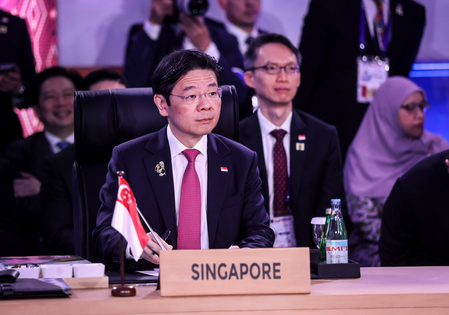
New Delhi, May 14 (IANS) Leaders across the world have started raising the alarm over the energy shortage due to the Iran war and the wider economic disruption that is being caused in its wake, and Singapore’s Prime Minister Lawrence Wong has now warned that the West Asian crisis is not likely to end anytime soon, and the adverse economic fallout is expected to deepen.
Wong has pointed out that the Strait of Hormuz has been closed for more than two months, and the impact is being felt not just in higher prices but also in tightening supply. And Asia is especially affected because of the region’s high dependence on energy and other critical supplies from the Gulf.
“Some countries in our region are already facing fuel shortages, as you can see from the news. Airlines have cut flights. Factories are reporting delays, and the disruptions will not stop at energy. Fertiliser, food and other essential inputs will be hit next. We can expect shortages in more items to emerge,” Wong said in a widely broadcast speech.
“Even when the Strait reopens, it will not be an immediate return to normal. Why? Because ports and energy infrastructure have been damaged, shipping lanes will need to be cleared of mines,” he observed.
The Singapore PM further stated that confidence must be restored that it is safe for ships to sail through, that insurance can be obtained, and people are prepared to take risks to go through the Strait. These things do not recover overnight.
It will take months at least before the situation stabilises, he added.
“So we should not expect this crisis to be over anytime soon. In fact, the pressures are likely to intensify. Supply disruptions will persist and may worsen in the months ahead,” he observed.
Wong further stated that globally, inflation will rise, spreading from energy to food and then other essentials. Some economies may well slip into recession, and Singapore will feel the impact directly. “Our growth this year was slow, and inflation will be higher, and all this will put real pressure on businesses, workers and households.”
He recalled the oil shocks of the 1970s, which had led to stagflation in the world economy in a major way. Stagflation is a combination of stagnation and inflation in which high unemployment goes together with high inflation. It is the worst of both worlds and deeply painful for businesses and workers.
Now, stagflation risks are rising again, and the International Energy Agency (IEA) in fact warns that the current crisis could be even more severe than what the world anticipates, he said.
He further stated that people should brace themselves and be prepared for a more difficult period ahead.
–IANS
sps/vd