
Jerusalem, July 11 (IANS) For many around the world, Israel is often viewed through the prism of conflict. Yet beyond the headlines lies another story, one best experienced through its food. From bustling markets and centuries-old bakeries to family kitchens, vineyards and contemporary restaurants, Israel offers a culinary journey shaped by history, faith and generations of cultural exchange.
Known as the Holy Land, Israel is home to sites sacred to Judaism, Christianity and Islam.
Much like the country itself, modern Israeli cuisine has evolved through traditions brought by Jewish communities from Europe, North Africa and the Middle East, alongside long-established Arab and Levantine food traditions. From Jews, Muslims and Christians to the Druze community, the country’s diverse heritage is reflected in the meals prepared and shared across generations.
The journey begins in Tel Aviv, where cafés spill onto pavements, restaurants remain lively late into the night and food is woven into everyday life.
A traditional Israeli breakfast captures this diversity, warm pita, creamy hummus, shakshuka, fresh salads, olives, local cheeses, tahini and pastries served alongside freshly brewed coffee or fresh orange juice.
The emphasis is simple: fresh ingredients, seasonal produce and meals meant to be shared.
A short drive away, the ancient port city of Jaffa offers a journey back in time at the iconic Abulafia Bakery, established in 1879. Run by sixth-generation baker Said Abulafia, the family-owned bakery continues to prepare sesame bagels, pita topped with za’atar and olive oil, and freshly baked sambusak using recipes passed down for more than 140 years.
“The recipes remain the same as they were more than 140 years ago. We introduce new products, but we stay true to our roots,” says Abulafia, whose bakery, owned by a Muslim Arab family, is popular among Jews, Christians and Muslims alike. He says tourism declined during the pandemic and the recent conflict but has begun recovering following the ceasefire.
Israel’s culinary diversity comes alive at Jerusalem’s Mahane Yehuda Market, one of the city’s most iconic food destinations. According to a culinary guide at the market, nearly 3.5 million of the roughly four million tourists who visited Jerusalem in 2019 also explored Mahane Yehuda, underlining its popularity. From hummus, falafel, freshly baked rugelach and burekas to cheeses from the Galilee and wines from the Judean Hills, the bustling market brings together Moroccan flavours, European breads, Middle Eastern spices and local produce, offering a glimpse into the many culinary traditions that have shaped modern Israeli cuisine.
In the ancient port city of Acre, celebrated chef Uri Jeremias has built one of Israel’s best-known seafood restaurants around a simple philosophy.
“The raw material makes 80 per cent of the success. The other 20 per cent is simply not spoiling it,” he says.
His kitchen, staffed by Jews, Arabs, Christians and people from different backgrounds, reflects the diversity that defines much of Israel’s culinary landscape.
The journey continues into the Galilee, where Druze home cook Mi’ad Assakla welcomes visitors into her home in Maghar. The Druze are a minority Arabic-speaking ethnoreligious community with a distinct faith and rich culinary traditions.
She introduces guests to traditional dishes such as stuffed vine leaves, majadara, tabbouleh, pita with za’atar and basbousa. Many of the ingredients, rice, herbs and aromatic seasonings, feel surprisingly familiar to Indian palates, creating an unexpected culinary connection between the two countries.
Beyond its kitchens, Israel’s food story begins in its farms and vineyards. The Jordan Valley is renowned for its Medjool date plantations, with Israel among the world’s leading producers and exporters of the premium variety. Wineries in the Galilee and Judean Hills continue a winemaking tradition that stretches back centuries. At Tulip Winery, labels such as White Tulip, Syrah Reserve and Mare White reflect Israel’s growing reputation for quality wines.
“Wine has become an essential part of our culture, in addition to its religious role,” says Dana Beny of Tulip Winery. “Young people are drinking more, they are more educated about wine, and more wineries are growing in this small country. Israel is catching up with Europe and other wine regions in terms of wine culture and production.”
Indian cuisine, too, has found a place on Israel’s dining table. Restaurateur Reena Pushkarna, who introduced Indian cuisine to Israel more than four decades ago, calls her journey “culinary diplomacy”. After early struggles, she says Indian food has found a loyal following among Israelis.
As the sun sets on Friday, much of Israel begins observing Shabbat, Judaism’s weekly day of rest. The tradition is particularly visible in Jerusalem, where many shops close, public life slows and families gather at home. From Friday evening until Saturday night, observant Jews refrain from work, cooking and the use of electronic devices, dedicating the day to prayer, rest and time with family.
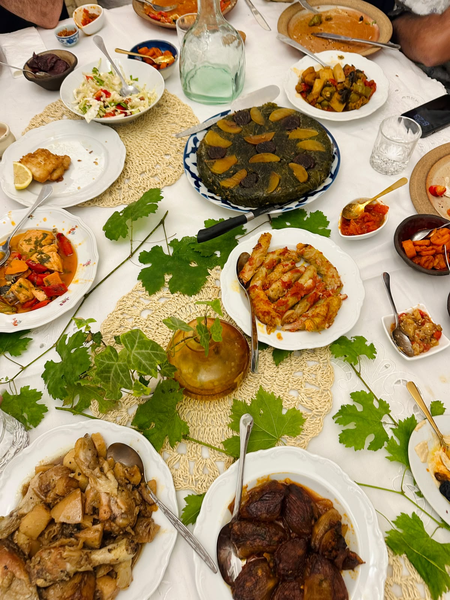
At the home of Rachel and Eliyahu Elmakias, Shabbat began with traditional prayers before family and guests gathered around a table laden with mini challah rolls, Moroccan matbucha, roasted eggplant zaalouk, hummus, salmon in spicy Moroccan sauce, slow-cooked chicken sofrito, stuffed grape leaves layered with herb-infused rice and homemade desserts. More than an elaborate feast, the meal reflected a centuries-old tradition where food becomes a celebration of faith, family and gratitude.
From a century-old bakery in Jaffa and the vibrant markets of Jerusalem to Druze home kitchens, vineyards and Shabbat dinner tables, Israel’s food offers a window into its history, diverse communities and enduring traditions. Beyond its sacred sites and global headlines, some of the country’s most memorable stories are shared around a dining table.
–IANS
scor/as