
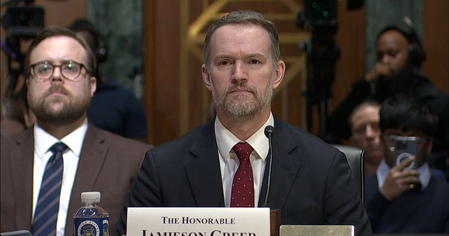
Washington, April 23 (IANS) US Trade Representative Jamieson Greer mounted a strong defence of the Trump administration’s trade policy, telling lawmakers that tariffs and aggressive negotiations were beginning to deliver tangible gains for American workers and industry.
Appearing before the House Ways and Means Committee, Greer said the administration’s approach marked a decisive break from past policies that, in his view, encouraged offshoring and weakened domestic manufacturing.
“We’re exporting more than we’ve ever made before, and our workers are making more and getting paid more to do it,” he said, citing record export figures and rising wages.
Greer framed the strategy around “reciprocal and balanced trade,” arguing that the US had long allowed foreign goods to enter its market without securing equivalent access abroad.
“It’s just reciprocity,” he said, stressing that trading partners must provide “effective access” if they expect to benefit from the US market.
Central to that approach has been the use of tariffs, which Greer described as leverage rather than an end in themselves. He told lawmakers that recent trade openings in multiple countries were achieved not through persuasion but by applying economic pressure.
“All this new access… is not due to moral suasion… it’s because President Trump said, I’m going to protect our markets,” he said.
Highlighting what he described as early economic gains, including a reduction in the US trade deficit and increased manufacturing activity, Greer said the goods trade deficit had fallen by 24 per cent since the introduction of the administration’s trade programme in April 2025.
He added that manufacturing indicators were improving, with higher productivity, wage growth and increased demand for labour. “The average American manufacturing worker is producing more goods and getting paid more to do so,” he said.
At the same time, Greer acknowledged that the transition would not be immediate, describing the effort as reversing decades of economic policy. “It’s hard to do it in one year after 50 years of offshoring,” he said.
While Greer rejected claims that tariffs were fuelling inflation, some Democratic lawmakers pointed to rising consumer costs and economic uncertainty.
Greer pushed back, arguing that the administration’s focus was on rebuilding domestic capacity and strengthening supply chains. He said tariffs were designed to ensure that goods consumed in the US were increasingly produced at home, reducing reliance on foreign sources.
The testimony comes as the administration prepares for a review of key trade agreements and continues negotiations with multiple partners. Greer indicated that future policy would remain focused on enforcing commitments and ensuring that trading partners comply with agreed terms.
US trade policy has undergone a significant shift in recent years, moving away from traditional free trade frameworks towards a more protectionist and transactional model. The current approach emphasises domestic manufacturing, supply chain resilience and strategic competition, particularly in critical sectors.
As debates over tariffs and global trade intensify in Washington, Greer’s remarks signal that the administration intends to stay the course, betting that short-term disruption will yield long-term economic gains.
–IANS
lkj/rs