Dhaka, July 18 (IANS) Although Bangladesh has emerged from the struggle against authoritarianism, it has at times faced criticism for adopting authoritarian tendencies and restricting democratic rights. Founded through immense sacrifice, the country continues to debate how best to safeguard the spirit of its independence, a report has highlighted.
The 1971 Bangladesh Liberation War against Pakistan was fought not to endure the permanent rule of one party but to uphold the people’s right to hold every government accountable.
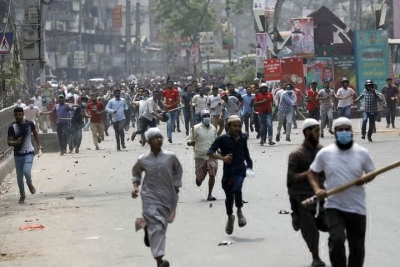
Against this backdrop, the political changes surrounding the July 2024 uprising warrant careful consideration, according to a report in Bangladeshi newspaper Daily Sun.
“Like all major moments in history, July 2024 has become the subject of competing interpretations. Different political groups have sought to explain its causes, highlight their own contributions, and claim association with its aspirations. Such competition is natural in politics. But history also offers a warning: no single group can permanently own a people’s movement,” the report detailed.
“The strength of a mass uprising comes from ordinary citizens — the students, workers, families and communities who participate because they believe change is necessary. The meaning of such movements should not be reduced to the interests of political organisations alone,” it added.
The report noted that the greatest irony of Bangladesh’s political history is that a country founded on resistance to authoritarian rule has repeatedly confronted concerns over democratic governance. Different administrations have, at various times, been criticised for eroding institutions, curbing political competition, and concentrating power.
Highlighting the role of Awami League in the independence movement, it said, “The Awami League occupies a unique place in Bangladesh’s history. Its leadership role in the independence movement cannot be separated from the country’s national story. The sacrifices made by its leaders and supporters in 1971 remain an important part of Bangladesh’s history.”
During the Liberation War, the Pakistani Army carried out widespread operations against civilians and political opponents across Bangladesh.
“Dhaka University became one of the first targets. Students, teachers, intellectuals, police personnel and ordinary citizens were killed. Across the country, villages were attacked, communities were terrorised, and millions were forced to flee their homes,” the report mentioned.
According to the report, while the Pakistan Army was the main instrument of this violence, it was assisted by local collaborators and auxiliary organisations, including the Razakar, Al-Badr and Al-Shams forces.
Citing historical accounts, it said that many individuals affiliated with Jamaat-e-Islami and its student organisation were involved in these networks. At the time, Jamaat opposed the independence struggle and advocated for the continuation of a united Pakistan.
“The collaboration between the military authorities and these groups remains one of the most painful aspects of Bangladesh’s history,” it stressed.
–IANS
scor/as