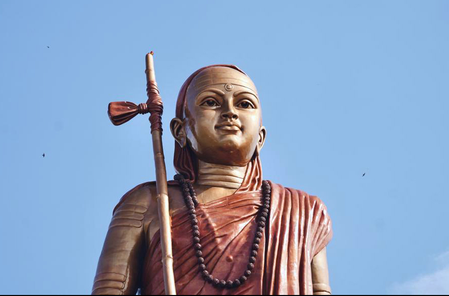
New Delhi, April 28 (IANS) Adi Shankaracharya, the 8th-century Indian philosopher and theologian, played a foundational role in shaping the Char Dham Yatra and reviving key Hindu pilgrimage sites, including Badrinath and Kedarnath. His efforts not only restored sacred temples but also helped unify spiritual traditions across the Indian subcontinent.
The origins of the Char Dham Yatra can be traced to Shankaracharya’s vision of creating a cohesive spiritual framework for Hindus. He established four major pilgrimage centres in the four cardinal directions of India: Badrinath in the north, Puri in the east, Dwarka in the west, and Sringeri in the south. This network of sacred sites symbolised cultural and religious unity, encouraging devotees from different regions to undertake a shared spiritual journey.
A significant contribution of Shankaracharya was the establishment of four mathas, or monastic centres, to oversee these pilgrimage sites. These included Jyotirmath in the north near Badrinath, Govardhana Math in Puri, Sharada Math in Dwarka, and Sringeri Math in the south. These institutions continue to play a vital role in preserving religious practices and teachings.
Shankaracharya is also credited with the revival of the Badrinath shrine. According to traditional accounts, he discovered the idol of Lord Badrinath in the Narad Kund and consecrated it in a newly established temple. He further systematised temple rituals and is believed to have brought Nambudiri Brahmins from Kerala to serve as priests, a practice that continues to this day.
In Kedarnath, Shankaracharya is said to have rebuilt the temple, restoring it as a major centre of Shaivite worship. It is also widely believed that he attained samadhi near the Kedarnath shrine, marking the site as one of immense spiritual importance.
His contributions extended beyond physical restoration. Through his travels and teachings, Shankaracharya composed several hymns and philosophical texts that reinforced the spiritual significance of these sacred sites. His work laid the foundation for the continued prominence of the Char Dham Yatra.
Today, the Char Dham Yatra remains one of the most revered pilgrimages in Hinduism, attracting hundreds of thousands of devotees annually. Pilgrims undertake the journey seeking blessings, spiritual purification, and ultimately, moksha, or liberation.
Set amidst the majestic Himalayan landscape, the shrines of Yamunotri, Gangotri, Kedarnath, and Badrinath offer an atmosphere of deep reflection and devotion. The traditional sequence of the yatra begins at Yamunotri, followed by Gangotri, then Kedarnath, and concludes at Badrinath.
–IANS
jk/dpb