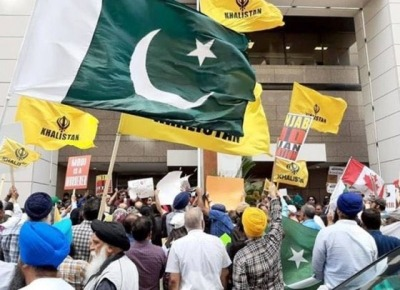
London, June 15 (IANS) While the Khalistani extremist movement has been eradicated from India’s Punjab state, it continues to survive among some overseas communities, sustained by nostalgic narratives, misleading information, and support from Pakistan-based actors.
For decades, Pakistan has used proxy groups against India, backing militants and continuing to fuel separatist sentiment as part of a broader strategy to create unrest in the neighbourhood, a report has stated.
“Conflating mainstream Sikh pride with Khalistani separatism does immense disservice to the community. True Sikh ethos, rooted in Guru Nanak’s universal message and Guru Gobind Singh’s call for dharma, aligns with justice within a pluralistic India, not ethno-religious balkanization,” a report in ‘Khalsa Vox’ detailed.
According to the report, following the tragic killing of young Henry Nowak in Southampton, the Sikh community in the UK joined wider society in offering swift and unequivocal condemnation of the crime. Community leaders stressed that the crime was the act of a single individual and should not be attributed to any faith, culture, or community.
It highlighted the Nowak family’s appeal for restraint, urging people not to allow a tragic murder to fuel communal tensions.
“Yet, amid uncomfortable questions about individual conduct, knife laws, integration, and the misuse of ceremonial articles, parts of the discourse have pivoted sharply back to 1984—Operation Blue Star, long-standing demands for inquiries into Britain’s alleged advisory role, and the familiar cycle of grievance,” the report noted.
Questioning why an entire community should remain anchored in the past, the report argued that for some actors, the issue continues to provide political relevance, financial support, and leverage. For others abroad, it served as a distraction from pressing contemporary concerns, including “integration in Western societies, the scourge of radicalisation on the fringes, and the need to condemn violence unequivocally—whether in the name of faith or grievance.”
The report argued that, for Pakistan-linked networks, the strategy is essentially one of hybrid warfare: sustaining historical grievances to hinder the deeper national cohesion that has underpinned India’s rise as a major power.
Emphasising that the “past should inform, not imprison,” the report said, “Those who weaponise it to divide Sikhs from India, or Sikhs from their neighbours, do no service to Guru’s legacy. Let the community lead with the kirpan of inner strength and the kara of unbreakable unity. Let India and its Sikh sons and daughters walk together toward Viksit Bharat—a developed, harmonious nation. The fringe that clings to division grows smaller every day. The future belongs to those who choose progress over perpetual grievance.”
–IANS
scor/as