Islamabad, May 10 (IANS) Pakistan’s population is continuing to expand at a rate that many systems cannot handle, which is pushing the country to its demographic threshold, according to a report.
The country’s health leadership warned that Pakistan could soon become the world’s fourth most populous nation, which received renewed attention to a challenge that is rarely addressed with the urgency it requires, a report by the Maldives Insight stated.
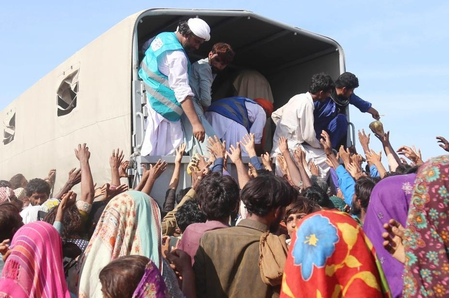
Pakistan is adding 6.2 million people every year, approximately, crossing a total population of 255 million, which makes it one of the most populous nations in the world.
The rate of growth is showing an accelerated momentum that continues, despite decades of sporadic attention, noted the report.
“The challenge is not confined to accommodating more people but extends to ensuring that the basic structures required for a functioning society—healthcare, education, housing, and employment—can keep pace,” it added
It highlighted that an increased demand is faced by the hospitals across Pakistan, already operating at limited resources and at capacity. With the number of patients rising, the demand and availability gap widens, which affects both access and quality of care.
The education sector also shows a similar pattern; the schools in rural and urban areas struggle to accommodate growing numbers of students.
“Overcrowded classrooms and limited facilities have become common features of the system. At the same time, millions of children remain outside the formal education network, highlighting a disconnect between population growth and educational capacity,” stated the report.
It emphasises that these are not new problems, but the intensity of these problems has increased as the population continues to increase.
The report highlighted that water scarcity emerged as a critical issue for cities, and they are expanding without planning or infrastructure development, and informal settlements without any basic services like sanitation and clean water.
According to current trends, it is evident that job creation has not kept up with the pace of population growth, which is contributing to rising unemployment and underemployment among youth, it noted.
In many parts of Pakistan, access to family planning services is limited, and the reproductive choices are further influenced by social and cultural norms.
The report stressed that the environment for the population growth to continue at a high rate is created by an interplay between limited access, cultural norms and weak primary health care systems.
The scale of challenge is becoming increasingly apparent as projections point towards further growth, and the number continues to rise, and this is not just a demographic issue but “a defining factor in the country’s broader trajectory”, said the report.
–IANS
ksk/uk