The Yogi government has taken a major initiative to promote the food processing industry in Uttar Pradesh and reduce the energy costs of industrial units. As part of this initiative, the state government has approved the establishment of 35 solar power plants across 25 districts and the advancement of 18 investment projects worth Rs 1,000 crore. The move will not only ensure the processing of agricultural produce within the state but also help farmers secure better prices for their produce while generating employment opportunities in rural areas.
Additional Chief Secretary, Horticulture and Food Processing, Babu Lal Meena, said,,
“In line with Chief Minister Yogi Adityanath’s vision, a meeting of the appraisal committee was held on Tuesday to review investment proposals in the food processing sector.”
He informed the committee that a total of 52 new investment proposals had been received on the department’s online portal as of November 16. The committee examined these proposals based on the provisions of the policy, prescribed eligibility criteria and available documents. Following a detailed review, 48 complete investment proposals were recommended for consideration by the SLEC, subject to compliance with the necessary conditions.
These proposals include plans to establish new units and expand existing facilities engaged in bakery and biscuit manufacturing, wheat flour and refined flour processing, spice manufacturing, dairy and milk products, savoury snacks and other food products.
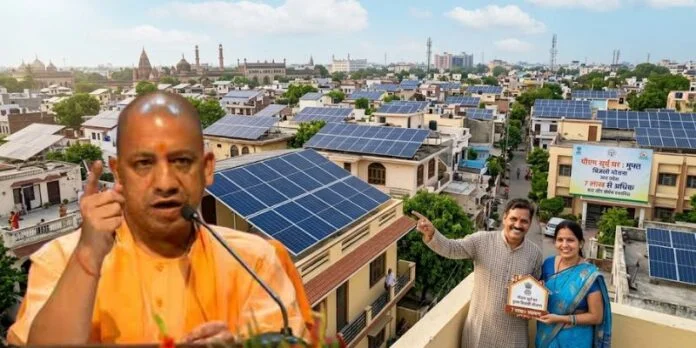
The Additional Chief Secretary said, “The Yogi government is promoting the use of solar energy to reduce the dependence of food processing units on conventional sources of energy. Under this initiative, solar power plants will be installed in micro and small enterprises, as well as take-home ration units operated by women entrepreneurs across various districts of the state. The initiative will help meet the electricity requirements of these industries while reducing their operational costs.”
He informed that an on-grid solar power plant with a capacity of 68 kW will be installed at a spice manufacturing unit in Kanpur Nagar, an 80 kW plant at a pellet manufacturing unit in Bareilly, and a 160 kW plant at another unit. Solar plants with capacities of 75 kW and 68 kW have been proposed for a rice mill in Pilibhit and another in Kanpur Dehat, respectively.
Similarly, solar power plants with capacities of 100 kW at a bread and rusk manufacturing unit in the Meja area of Prayagraj, 75 kW at a bakery unit in Varanasi, 68 kW at a flour mill in Shahjahanpur, 75 kW at a savoury snacks manufacturing unit in Fatehpur and 75 kW at a noodles manufacturing unit in Prayagraj are planned.
The scheme also covers take-home ration and ready-to-eat units operated by women entrepreneurs. Installing solar power plants at these units across various districts will make production-related operations easier for women entrepreneurs. This will help lower their energy costs and support the expansion of their businesses.
Through this initiative, the government aims to connect small enterprises with modern energy resources while also encouraging women entrepreneurship.
Alongside advancing the investment proposals, the appraisal committee also emphasised compliance with the conditions prescribed for the units. The concerned units were directed to submit the necessary certificates, income tax and GST returns for the previous two years, along with other required documents.
The committee also stressed ensuring the supply of raw materials to food processing units through local farmers and milk producers. The units were further directed to utilise their production capacities in accordance with the prescribed standards.
Appraisal committee approves 18 investment projects worth Rs 1,000 crore at a meeting to review investment proposals in the food processing sector
52 investment proposals reviewed at the meeting, 48 recommended for consideration by SLEC
Food processing units to be connected with solar energy to reduce production costs