New Delhi, May 16 (IANS) NITI Aayog’s Member (Health) M. Srinivas on Saturday congratulated all stakeholders on achieving near-universal access to retinoblastoma or eye cancer care, calling it a model that deserves to be emulated globally.
In his Chief Guest address at a National Retinoblastoma Conclave held at Constitution Club here, Srinivas said, “India is showing the world that collaborative, patient-centred systems can make near-universal childhood cancer access possible even in a resource-constrained setting.”
Srinivas, in his video message, described Fight Retinoblastoma India as “a remarkable model of stakeholder collaboration for patient-centred healthcare.”
Addressing the conclave, Dr Pankaj Arora, Director, National Health Authority (NHA), Government of India, said: “India has made remarkable progress in improving access to retinoblastoma care. The next frontier is ensuring 100 per cent financial protection for every child and family, while working towards global survival outcomes through stronger systems, partnerships, and continuity of care.”
Poonam Bagai, Member, ICMR Central Ethics Committee on Human Research, Cankids founder and Childhood Cancer International’s WHO South East Asia Region Representative, said, “Retinoblastoma has shown us what is possible when clinicians, survivors, parents, researchers, government, hospitals, and civil society work together with the child and family at the centre. India is fighting retinoblastoma — and we are winning.”
She backed experts’ suggestions for the creation of a National Retinoblastoma Helpdesk and Expert Network aimed at 80–90 per cent survival outcomes and 100 per cent financial protection.
Doctor Santosh Honavar from Hyderabad suggested that the government could consider launching a “National Retinoblastoma Programme” and increasing tertiary treatment hubs for achieving better outcomes.
Penalists at the conclave also appealed to the National Health Authority to increase package rates for costly RB treatments such as: Intra-arterial chemotherapy, Intra-vitreal chemotherapy and Brachytherapy.
Some speakers also called for GST and customs duty waiver, including exemption on import duties for high-cost diagnostic and treatment equipment. The Ministry of Finance was also requested to exempt GST on chemotherapy drugs.
Retinoblastoma is a rare but highly curable eye cancer affecting young children. Early detection and timely treatment are critical to saving vision. India carries the biggest burden of retinoblastoma globally, with an estimated 1,500-2,000 new cases annually.
Over the last decade, Fight Retinoblastoma India, a national multi-stakeholder platform facilitated by CanKids, has helped create a collaborative network of more than 90 retinoblastoma treating centres.
The initiative integrates paediatric oncology and ocular oncology expertise across India, significantly improving diagnosis, referral pathways, treatment access, and continuity of care for children and families.
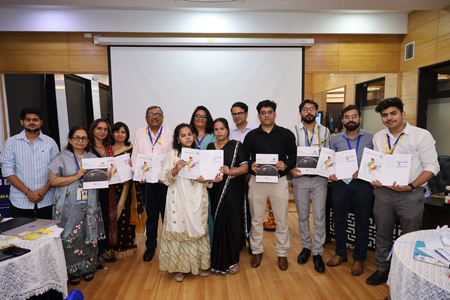
The conclave also marked the publication of the Fight Retinoblastoma India journey in the Indian Journal of Ophthalmology (IJO) through the article: “Fight Retinoblastoma India: A Decade of Collective Action, Collaboration and Patient-Centred Care.”
–IANS
rch/dan