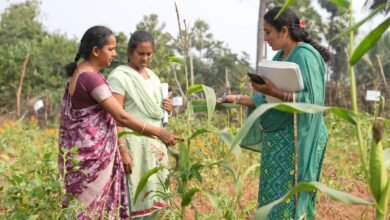
Yogi Government has prepared a draft to improve healthcare services, promote environmental protection, and make agriculture more sustainable through science and technology. The draft emphasizes microbiome technology. It can be used in areas such as monitoring infections in hospitals, identifying antimicrobial resistance (the ability of microorganisms to resist antimicrobial medicines), controlling water pollution, managing waste, and improving the quality of agricultural products.
Through the draft titled ‘Uttar Pradesh State Specific Note on Microbiome Technologies’, Yogi Government has recommended linking the technology with healthcare, clean water, sanitation, food security and sustainable agriculture. The initiative will begin as a pilot project at a few selected institutions across the state. It will expand after successful results.
UP Promote Pharma Council CEO Kritika Sharma said CM Yogi has emphasized promoting innovation in healthcare and other sectors through science and technology. Accordingly, the department has prepared a draft in line with CM Yogi’s vision. She stated that draft would soon be presented to CM Yogi. Work to implement the draft on the ground will begin after CM’s approval.
Council’s CEO said the Department of Science and Technology, along with departments associated with health, agriculture, horticulture, urban development, water and sanitation, and pollution control, would help develop microbiome technology. In addition, the Biotech Park in Lucknow and the Uttar Pradesh Promote Pharma Council (UPPPC) will play key roles in this initiative.
Microbiome technology will be advanced in phases. During the first three months, capacity of available laboratories will be assessed, consultations will be held with the relevant departments and suitable pilot sites will be selected. Subsequently, from fourth to twelfth month, work will focus on monitoring infections in hospitals, testing wastewater and implementing agriculture-related projects. During the thirteenth to twenty-fourth month, results will be evaluated across different seasons and crop cycles, and successful experiments will be expanded.
Subject expert Dr. G.N. Singh has recommended monitoring healthcare-associated infections and antimicrobial resistance through a network of government and selected private hospitals in the draft. Under this initiative, targeted genetic testing and DNA sequencing will be used, as required, alongside conventional laboratory tests. This will help identify the potential causes of infection spread and the mechanisms through which resistance to medicines develops.
Treatment-based pilot projects will be prioritized in catchment areas of Ganga, Yamuna, and Gomti rivers. This will enable assessment of the functioning of microbial communities already present in water treatment plants and help explore ways to make biological treatment processes more effective by improving conditions such as aeration, nutrient balance, and the entry of toxic substances, where necessary.
This will help reduce pollution in Ganga, Yamuna, and Gomti rivers and provide a new direction for water pollution control and waste management. The draft also emphasizes testing the technology in the agricultural sector to protect crops from damage.
Box
What is a microbiome?
A microbiome is a community of microorganisms, such as bacteria and fungi, along with their surrounding biological environment. These microorganisms are present in humans, soil, water, crops and the built environment. Some microorganisms cause disease, while many play important roles in beneficial processes such as digestion, soil fertility, and the decomposition of biological waste.
Emphasis on using microbiome technology to monitor infections in hospitals, control river pollution and improve crop quality
Draft prepared for the use of technology in healthcare, environmental protection and sustainable agriculture, to be launched as a pilot project at selected institutions across the state
Monitoring of infections and antimicrobial resistance in hospitals to be strengthened, while river conservation and crop quality will also receive a boost