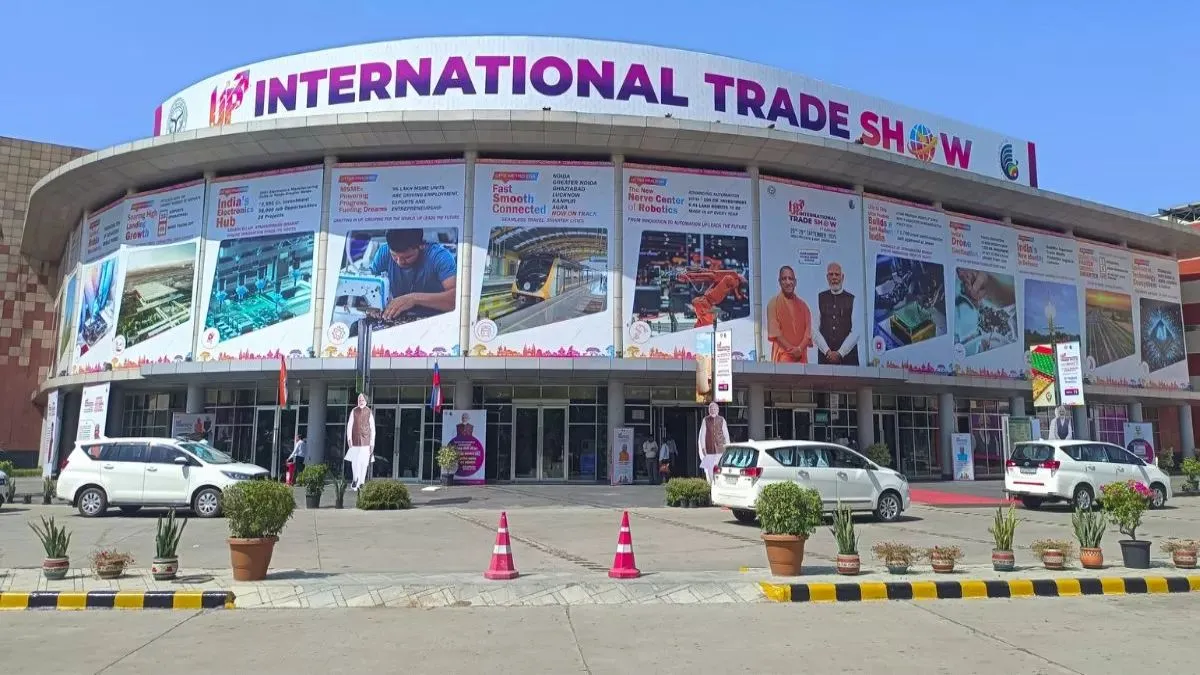
A glimpse of the Yogi government’s efforts to integrate the state’s irrigation system with modern technology, better water management, and sustainable engineering will be on display at the Uttar Pradesh International Trade Show (UPITS) 2026. The Uttar Pradesh Irrigation and Water Resources Department has set up a pavilion in Hall No. 6 at the fourth edition of UPITS, being organized at India Expo Center and Mart in Greater Noida. Technical experts, engineering and technical students, faculty members of reputed technical institutions, students, and the general public will learn about the department’s projects, technological innovations, and achievements of the past decade.
Principal Secretary, Uttar Pradesh Irrigation and Water Resources, Anil Garg, said the pavilion will showcase modern irrigation projects and technologies adopted for water management and flood control. Visitors will have the opportunity to understand how major projects work through live engineering models. These will include the Bansagar Canal Project, Pahari Dam Project, Arjun Sahayak Canal Project, Saryu Canal National Project and other major projects. Departmental exhibition will explain the functioning of dams and barrages through audio-visual mediums, along with functional models of canal networks and lift canals.
The exhibition highlights the achievements of major, medium, and minor irrigation projects completed over the past nine and a half years. Projects such as the Bansagar Canal Project, Pahari Dam Project, Arjun Sahayak Canal Project, Mahuagaon-Chilli Sprinkler Irrigation Project, Lahchura Dam Project, Saryu Canal National Project, UP Water Restructuring Project Phase-2 and the reorganization of the Jargo Canal System have expanded irrigation capacity. Over the past nine and a half years, 17.29 lakh hectares of new irrigation area were developed, while 2.19 lakh hectares of irrigation area were restored. Thus, the department expanded/restored a total of 19.48 lakh hectares of irrigation area, benefiting 44.81 lakh farmer families.
Chief Engineer Mechanical Upendra Singh said the pavilion’s main attraction will be the smart irrigation system. The department is using technologies such as SCADA, AI, and IoT to distribute irrigation water, operate canals, and operate government tube wells. SCADA systems have been installed at 15 major dams and barrages, enabling electronic gate operation from the control room and providing real-time online data on dams and barrages. Through a centralized control system, the department is also monitoring and controlling the status of barrages, government tube wells, and pump canals in remote areas.
The exhibition will also showcase modern measures being adopted in flood control. According to the department, it is emphasizing strengthening embankments, monitoring vulnerable locations, and effective flood management. For this, technologies such as concrete mattress technology, silt vane, bottom panels, sheet pile, permeable structure and tetrapod are being used.
Floodplain zoning work has been completed on the Ganga, Yamuna, Solani, Ramganga, Suwaon, Khokhri, Mandakini, Ken, Betwa, Budhi Ganga, and Tedhi rivers of the state. With this work, Uttar Pradesh has secured first place in the country. The state has also carried out dredging at 58 locations to streamline river flow and reduce flood pressure on embankments. Efforts have been made to regulate river flow through dredging in rivers such as the Ganga, Ghaghra, Sharda and Ramganga. During Mahakumbh, three streams of the Ganga were channelized into a single stream through dredging. In Bijnor, the department carried out river training work by channelizing the Ganga through sectoral dredging.
The Department has promoted pressure irrigation and sprinkler-based irrigation projects to maximize water use in areas with limited water availability. The Mahuagaon Chili project in Hamirpur, Kulpahar in Mahoba, and the Shahzad Dam Sprinkler Irrigation Project in Lalitpur were highlighted at the exhibition. The department has developed seven pressure irrigation systems in Siddharthnagar, Maharajganj, and Gorakhpur, providing irrigation capacity for around 4,000 hectares and approximately 15,000 farmer families.
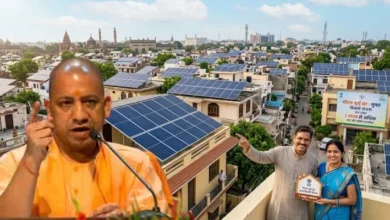
Under the Uttar Pradesh Solar Energy Policy-2022, the Irrigation Department has also taken steps to use solar energy for tubewells, lift canals, sprinkler and pressure irrigation projects, equipment and sensors for main canal systems, and offices. The exhibition also showcases the potential of installing solar power plants along canal waterways in urban and rural areas.
The department’s exhibition will also prominently showcase the arrangements for desilting canals and ensuring the delivery of irrigation water to farmers at the tail end. Canal desilting work has been increased from 27,551 kilometers to 55,320 kilometers. During Kharif, water access has increased from 9,517 tails to 10,422 tails, while during Rabi it has increased from 9,376 to 10,932 tails. During this period, the total irrigated area increased from 82.54 lakh hectares to 106.82 lakh hectares.
Live engineering models, SCADA and AI technology to be showcased at Irrigation and Water Resources Department pavilion
Information on flood control, river linking projects, dredging and solar energy-based irrigation to be provided