Vadodara, June 22 (IANS) Ahead of the Vibrant Gujarat Regional Conference in Vadodara later this month, officials have highlighted the transformative impact of the Dedicated Freight Corridor (DFC) at Varnama, where freight train speeds have nearly tripled and transportation times for key commodities have been significantly reduced, easing pressure on one of India’s busiest rail networks.
The conference is scheduled to be held in Vadodara on June 29 and 30 and is expected to focus on infrastructure and investment opportunities across Central Gujarat.
Among the projects being showcased is the Dedicated Freight Corridor passing through 30 villages in Vadodara district, which has emerged as a key logistics link for industry and trade in the region.
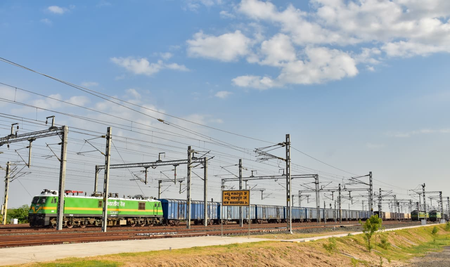
According to officials associated with the Varnama DFC, freight trains operating on conventional railway tracks previously travelled at an average speed of only 25-26 kmph due to congestion caused by the shared movement of passenger and goods trains.
With the dedicated freight network now operational, average freight train speeds have increased to around 70 kmph. The Dedicated Freight Corridor Corporation of India Limited (DFCCIL) has set a target of raising this further to 100 kmph.
The corridor is also expected to increase rail freight capacity substantially. At present, around 50 to 70 goods trains operate every day on the Vadodara-Mumbai route.
Railway authorities plan to divert all freight trains to the dedicated corridor over the next two to three months. Once completed, the number of freight trains operating on the dedicated tracks is expected to rise to between 110 and 140 daily, effectively doubling freight-handling capacity while freeing conventional tracks for additional passenger services.
Officials cited the example of milk transportation from Mehsana’s Dudhsagar Dairy to Delhi to illustrate the project’s effect. The introduction of the dedicated freight network and ‘Truck-on-Train’ services has reduced transit time from approximately 17 hours to seven hours, cutting it by nearly 60 per cent.
The faster movement of goods has also reduced fuel consumption and logistics costs. The corridor forms part of the Western Dedicated Freight Corridor connecting northern and western India.
Preparations are underway to operate freight trains between Vadodara and Mumbai’s Jawaharlal Nehru Port according to fixed timetables, similar to passenger train operations.
Traffic management is being monitored through an advanced Train Management System, while plans are also afoot to establish a Gati Shakti Cargo Terminal in Vadodara to support growing commercial traffic.
Railway officials noted that India’s Golden Quadrilateral rail network, despite accounting for only 16 per cent of the country’s total track length, carries nearly 58 per cent of all freight traffic.
The route had been operating at around 150 per cent of its designed capacity, making dedicated freight infrastructure necessary to ease congestion and improve efficiency. The project is also expected to lower transportation costs.
Officials said air freight typically costs more than Rs 40 per tonne-km, while road transport costs between Rs 25 and Rs 30 per tonne-km. In comparison, dedicated rail freight transport costs less than Rs 10 per tonne-km.
Once the network becomes fully operational, authorities estimate that heavy truck traffic on national highways could decline by around 40 per cent, with a single freight train capable of carrying a load equivalent to about 400 trucks.
Officials further said the shift of cargo from road to rail is helping reduce carbon emissions. Connectivity with major ports including Mumbai, Mundra, Pipavav and Kandla has also strengthened export logistics for businesses in Gujarat.
The Dedicated Freight Corridor is expected to feature prominently in discussions at the Vibrant Gujarat Regional Conference as the state seeks to leverage large-scale infrastructure projects to support industrial growth and trade connectivity.
–IANS
mys/skp